Imagine checking your wallet one morning and finding $1,200 sitting in tokens you didn’t buy. That’s what happened to early Uniswap users in September 2020 when the protocol airdropped 400 UNI tokens to every address that had ever made a trade on the platform. No announcement beforehand. No application. The tokens just appeared, and it remains one of the most famous crypto airdrop events in DeFi history.
That’s the magic, and the confusion, around crypto airdrops. They sound like free money, and sometimes they genuinely are. But there’s a lot more going on underneath.
This guide covers what airdrops actually are, how they work, how to qualify for the ones worth your time, and what separates legitimate airdrop strategies from the approaches that’ll get your wallet banned in 2026.
What Is a Crypto Airdrop?
A blockchain protocol reaches a certain size, decides to issue a governance token, and instead of selling it entirely to investors, it gives a chunk directly to the community that’s already using the product. The people who kept the lights on before anyone was watching get rewarded. Projects have been distributing free tokens since Bitcoin’s early days, but the model exploded during the DeFi boom of 2020-2021.
That’s the legitimate version. It’s also genuinely popular marketing: a well-executed airdrop gets written up everywhere, creates thousands of new token holders overnight, and builds a community with financial skin in the game faster than any ad campaign could.
The mechanics vary by project. Some send tokens to anyone holding a specific asset on a snapshot date. Others reward users who interacted with a protocol across a defined period, swaps made, liquidity provided, bridges crossed. A smaller category requires completing tasks: social follows, Discord joins, community votes. What they all share is the core premise: tokens land in your wallet based on something you either hold or did.
How Do Crypto Airdrops Work?
The lifecycle runs like this.
A project decides to distribute tokens, usually timed around a mainnet launch or a major protocol milestone. They define who qualifies, based on on-chain activity or holdings at a specific date. They take a “snapshot” of blockchain data at a particular block height, locking in which wallet addresses meet the criteria. Eligible wallets can then claim through an official portal, within a defined window.
That window matters more than people realise. Arbitrum’s 2023 airdrop had tens of millions of dollars worth of ARB tokens that went unclaimed simply because recipients didn’t know they qualified before the deadline closed.

There’s a distinction worth knowing early: retroactive vs. prospective airdrops. Retroactive airdrops reward wallets that already used the protocol before any announcement. Prospective airdrops publish eligibility criteria in advance and let users try to qualify. Retroactive airdrops tend to produce the bigger payouts, because the selection happened before anyone could optimise for it, and they’ve generated the most notable examples. Uniswap, Arbitrum, and Ethereum Name Service (ENS) all went retroactive.
Types of Crypto Airdrops
Not every airdrop works the same way, and the type determines what you need to do to qualify.
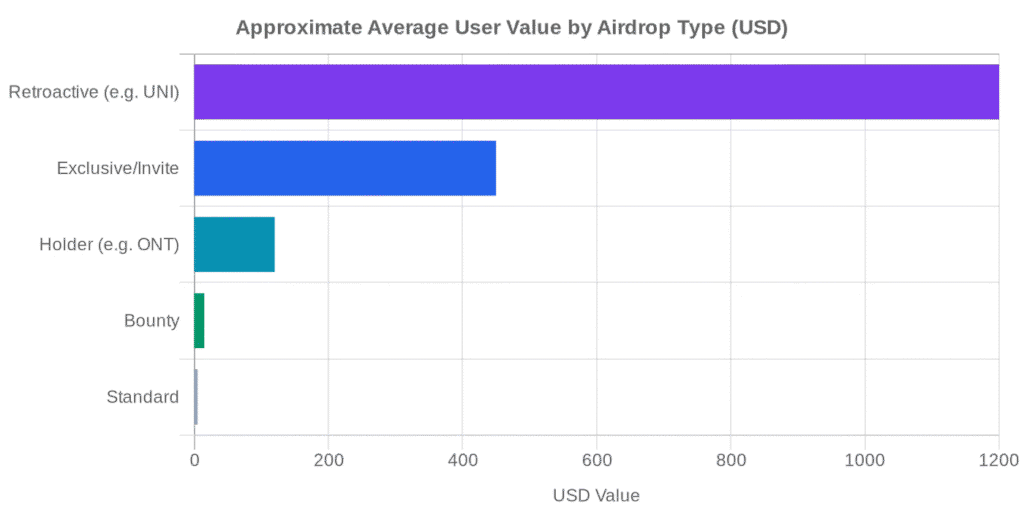
- Standard airdrops go to anyone who registers or expresses interest, usually with minimal requirements. Common for new projects trying to build an initial user base fast. Tokens are typically worth very little, and for good reason.
- Holder airdrops go to wallets holding a specific token at a snapshot date. The Ontology (ONT) airdrop to NEO holders in 2018 is a well-cited example, ONT was priced around $2 per token at distribution and the total value distributed came to over $40 million, according to Fidelity’s analysis of the drop. The catch: you had to be holding NEO in a compatible wallet at the right moment.
- Bounty airdrops require completing tasks. Social media follows, content creation, bug reports, referrals. The reward is usually small. These are basically free labour dressed up as token distributions, and most serious airdrop hunters don’t spend much time on them.
- Exclusive airdrops are invitation-only, typically for early testers, active community contributors, or protocol partners. These tend to be more meaningful, though by definition harder to anticipate.
- Retroactive airdrops are what most people are actually chasing. A protocol launches without a token. It builds real usage. Then it distributes tokens back to early users as a reward for participation that predates any financial incentive. This is Uniswap’s model. Arbitrum’s model. LayerZero’s model. These are the ones that have genuinely changed wallets.
Why Do Crypto Projects Give Away Free Tokens?
The short answer that I can provide is: it’s cheaper than advertising, and it works better.
Traditional marketing buys attention. A DeFi protocol can instead distribute tokens directly to people who’ve already proven they use the product, people who have genuine stakes in its success the moment the tokens arrive. The marketing happens automatically, because every recipient becomes an interested party.
There’s also a structural argument. For a protocol to function as genuinely decentralised, which carries both governance and regulatory implications, tokens need to be spread across a wide holder base, not concentrated in founding team wallets and early investors. A well-designed airdrop moves the needle on that distribution faster than almost anything else.
Then there’s the momentum effect. When Uniswap distributed UNI to 250,000+ addresses in September 2020, crypto Twitter talked about almost nothing else for days. I have been there on Twitter at that point, and I couldn’t just get out of the loop of this Airdrop madness. Every recipient was now a Uniswap stakeholder with a financial incentive to see the protocol grow. That kind of organic community building is difficult to manufacture. You either earn it or you don’t.
“Airdrops are the most capital-efficient user acquisition mechanism in crypto — you’re paying people with future governance rights, not cash, and every recipient becomes a distribution channel. The protocols that get the allocation formula right build communities that last years. The ones that don’t create mercenary capital that dumps on day one.” — Haseeb Qureshi, Managing Partner at Dragonfly Capital
The Airdrops That Actually Paid Out: Real Numbers
A few that moved meaningful amounts:
- Uniswap (UNI, September 2020): 400 UNI tokens per qualifying address. At launch, each allocation was worth approximately $1,200. The drop became the benchmark against which every subsequent retroactive airdrop gets compared, not just for the value, but for the model it established.
- Arbitrum (ARB, March 2023): Over 1.1 billion ARB tokens distributed in one of the largest governance token launches in DeFi history. Allocations varied by activity level, heavier historical users received significantly larger shares. The drop covered hundreds of thousands of wallets.
- Wormhole (W, 2024): Distributed to over 400,000 wallets, according to KuCoin’s published data at the time. One of the first major cross-chain bridge protocols to reward early users this way.
- zkSync (ZK, 2024): A heavily anticipated retroactive drop that distributed to hundreds of thousands of wallets. The actual amounts fell well below community expectations, a useful reminder that projected airdrop values are speculation until they’re not.
Let me tell you, zkSync was one of the most farmed protocols heading into its drop, and many of the most active farming wallets received less than casual users. Projects adapted their distribution formulas specifically to correct for gaming behaviour. The playbook that worked in 2021 doesn’t automatically work in 2026.
How to Get Crypto Airdrops in 2026: What Actually Works
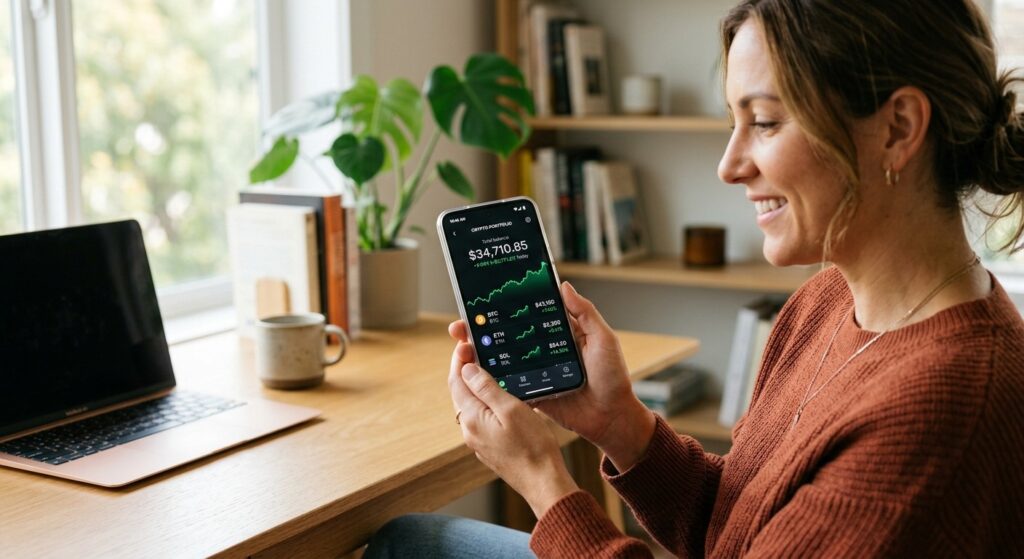
There’s no single path, but there’s a reliable pattern.
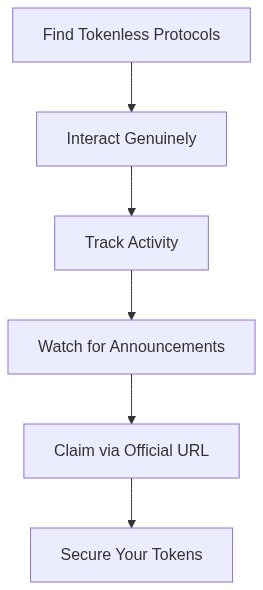
1. Find tokenless protocols with genuine traction.
The retroactive window closes the moment a project announces its token. Before that announcement, nobody knows for certain whether an airdrop is coming. What you’re looking for: protocols with real product usage, strong backing, active development, and no native token yet. “Tokenless” is the starting filter.
Platforms like DappRadar, Layer3, and CoinGecko’s airdrop tracker aggregate active opportunities and upcoming token distributions. Airdrops.io updates daily across Solana, Ethereum, and emerging L2 ecosystems. These are reasonable starting points for discovery, not exhaustive lists.
2. Interact in ways that suggest genuine usage.
Most retroactive airdrops evaluate some version of:
- Transaction count on the protocol over time
- Fees paid (which signals real economic activity, not zero-cost gaming)
- Length of time since first interaction
- Variety of activity, not just one repeated action
- Cross-chain presence, especially on the chain the project is building toward
The zkSync airdrop weighted heavily toward users with longer track records and diverse transaction types. Wallets that showed up one month before the drop with high-volume identical transactions largely got nothing.
3. Claim through official channels only.
This should be obvious, but fake claim portals are convincing and common. Navigate directly to the official project URL. Never connect your primary holdings wallet to a site you found through a DM or social media post. Legitimate airdrops don’t reach out, you go to them.
4. Track your activity across wallets.
Debank and Zerion let you monitor token balances and transaction history across chains from a single interface. Dune Analytics has community dashboards tracking eligibility for specific protocols in real time. Worth checking periodically if you’re actively farming.
What Is Airdrop Farming, And Does It Still Work?
Airdrop farming is deliberate participation: using protocols specifically to qualify for future token distributions, rather than for the protocol’s utility itself.
It became a recognised strategy after Uniswap. The approach is straightforward, find tokenless protocols that look like airdrop candidates based on their funding, team, and traction; interact with them consistently; repeat across multiple protocols simultaneously. Systematic tracking of activity across 20-30 protocols became its own cottage industry.
The multi-wallet version, running identical interactions from multiple addresses, used to work. It mostly doesn’t anymore. Major protocols now run Sybil detection: on-chain analysis that maps wallet relationships, funding sources, transaction timing, and behavioural patterns. LayerZero explicitly ran a self-reported Sybil campaign before its ZRO distribution, letting farmers self-identify in exchange for partial eligibility. Wallets identified through analysis but not self-reported were disqualified entirely.
“Sybil resistance is now the single biggest design challenge in token distribution. LayerZero’s self-report model was an experiment, not a solution — the next generation of airdrops will use on-chain identity primitives and social graphs to separate genuine users from farms at the protocol level, before distribution is even announced.” — Bryan Pellegrino, CEO of LayerZero Labs
zkSync disqualified millions of addresses before its drop. Some estimates put the disqualification rate above 40% of addresses that had interacted with the protocol.
The practical conclusion for 2026: farming with one wallet and genuine usage patterns is still a valid approach. Farming with 50 duplicate addresses is a reliable path to getting all 50 disqualified without any of them receiving tokens.
What actually works is what’s always worked in crypto, being an early genuine user of things that matter. Find a protocol you’d actually use. Bridge funds, provide liquidity, vote in governance, test new features. Document your activity with tools like Debank. The farming mindset is fine. The gaming-the-system approach has been largely patched.
One note on scale: community spreadsheets and tracking docs shared through Discord and Reddit (r/airdrop, r/CryptoCurrency) are worth following. The information shared there tends to be genuine because people are sharing strategies with their actual farming community. That kind of collaborative tracking is different from wallet duplication, it’s just organised genuine usage.
The Risks Worth Taking Seriously
- Scams. The fake airdrop is one of crypto’s oldest and most persistent attack vectors. You receive a DM with a link to claim tokens you supposedly qualify for. The site looks legitimate. You connect your wallet, sign a transaction, and your entire balance gets drained. A real airdrop doesn’t initiate contact. It doesn’t DM you. It never requires your private key or upfront payment to claim.
- Pump-and-dump distributions. Some airdrops exist specifically to manufacture price activity. Teams hold the majority of supply, distribute a small percentage across thousands of wallets to simulate community ownership, wait for recipients to create trading volume, then sell their stake while the price is inflated. Tokens collapse. Recipients lose the value before they can act. This pattern is more common with standard and bounty airdrops from unknown projects than with retroactive drops from established protocols.
- Tax obligations. In most jurisdictions, including the US, UK, and Australia, airdropped tokens are taxable at receipt as ordinary income, based on fair market value at the time of receipt. If the token later goes to zero, you still owe tax on what it was worth when it landed in your wallet. This caught a lot of people off-guard after the 2020-2021 cycle. Keep records: every airdrop received, the date, and the token’s price at that moment.
- Eligibility uncertainty. Projects can change criteria, delay launches, or simply decide not to issue a token at all. The time you invest farming a protocol isn’t guaranteed to produce anything. Treat each protocol you’re farming as a probabilistic bet, not a payroll.
Don’t put in money you need next month. Seriously.
Where to Find the Best Airdrops in 2026
There’s no single source worth trusting as a complete list, the best opportunities move fast, and many of the most valuable ones aren’t publicly announced until eligibility has already closed. That said, a few resources are worth keeping open:
- Airdrops.io, Updated daily with 600+ active airdrops across chains. Includes eligibility verification and task requirements.
- CoinGecko airdrop tracker, Covers upcoming token distributions with eligibility details and estimated values.
- DappRadar Rewards, Aggregates activity-based rewards and airdrop opportunities across DeFi protocols.
- Layer3 and Galxe, Quest platforms where protocols host task-based campaigns that sometimes precede token launches.
- CryptoRank Drophunting, Focuses specifically on retroactive airdrop candidates with research on likely eligibility signals.
The protocols worth tracking in 2026 tend to share a few characteristics: real product usage (not just TVL), institutional-grade backing, multi-chain presence, and no native token yet. None of that guarantees an airdrop, but it’s the profile that has historically produced them.
Conclusion
Crypto airdrops remain one of the few ways to earn meaningful token allocations without upfront capital, but only if you approach them as a genuine user, not a system gamer. The biggest payouts have consistently gone to early, authentic participants in protocols that went on to matter. Sybil detection has closed the multi-wallet loophole, and projects are increasingly sophisticated at distinguishing real usage from farming scripts. Focus on tokenless protocols with real traction, interact consistently across chains, claim only through official portals, and track your tax obligations from day one. The free tokens aren’t free if you lose your wallet chasing them.
FAQs
1. Are crypto airdrops actually free?
Yes, in the sense that you don’t pay for the tokens directly. But qualifying for meaningful retroactive airdrops usually requires real on-chain activity: gas fees paid, liquidity provided, time invested. The tokens are free. Everything that positions you to receive them has a cost.
2. How much can you make from crypto airdrops?
It varies wildly, the median airdrop is worth a few dollars. The Uniswap drop was worth roughly $1,200 at launch per qualifying address. Some participants in major retroactive drops over 2022-2024 made several thousand dollars from a single distribution. The expected value is positive for genuine early users of good protocols. It’s not a salary.
3. Do I have to pay taxes on airdrops?
In most jurisdictions, yes. The IRS treats airdropped tokens as ordinary income at fair market value on the date of receipt. The UK and Australia have similar treatment. Keep records, date received, token value at receipt, even for small amounts. The rules are jurisdiction-specific, so check locally if you’re outside the US.
4. Is airdrop farming legal?
Using protocols genuinely to qualify for future airdrops is legal. Using multiple wallets to game eligibility violates most protocol terms of service and is increasingly detected and disqualified through on-chain Sybil analysis.
5. What’s the safest way to interact with airdrop protocols?
Use a dedicated wallet, separate from your main holdings, for airdrop farming activity. Never sign transactions you don’t understand. Stick to protocols with public teams, audited smart contracts, and active community presence. Verify contract addresses on the protocol’s official site before interacting.
6. Can airdrops be scams?
Yes, and frequently. The fake claim portal, the pump-and-dump distribution, and the “send ETH to receive tokens” variation are all active in 2026. Unsolicited DMs, emails, or social posts offering airdrops are almost always attacks. Real airdrops don’t reach out, you find them through official channels.
Not financial advice. Crypto assets carry significant risk. If you’re considering putting meaningful capital into airdrop-related protocol activity, talk to a financial professional first.

Our Review Methodology
We evaluate each post based on thorough research, credibility of sources, accuracy of information, and relevance to our readers. Our editorial team follows strict guidelines to ensure all content meets high standards of quality.
Disclaimer
The content in this article is provided for informational purposes only and does not constitute financial, investment, or professional advice. Always do your own research before making any decisions.