Quick Verdict
OKX (formerly OKEx) is a Seychelles-based cryptocurrency exchange founded in 2017. It offers a broad range of services – spot trading, derivatives (futures, options), staking, a Web3 wallet and more – with hundreds of crypto assets (350+) and multiple fiat on-ramps. The platform is praised for its low fees (0.08% maker, 0.10% taker) and user-friendly interface. However, user trust is a major concern: many reviewers report frequent account freezes, blocked withdrawals, and poor support. In short, OKX is feature-rich and cost-effective for active traders, but potential users should weigh its negative feedback on service and security.
Key Takeaways
- Wide Crypto Selection: Supports 350+ cryptocurrencies and major fiat currencies (USD, EUR, GBP, AUD, etc.). Native token OKB offers fee discounts and voting rights.
- Low Fees: Spot trading fees start at 0.08% maker and 0.10% taker, with tiered VIP discounts for high-volume/OKB holders. Crypto deposits are free; fiat withdrawals incur modest fees (e.g. USD bank withdrawal ~$3).
- Security Measures: Implements industry standards (cold storage for ~95% of funds, mandatory 2FA, withdrawal address whitelisting, anti-phishing codes). No major public hacks to date, but user reports raise other concerns (see below).
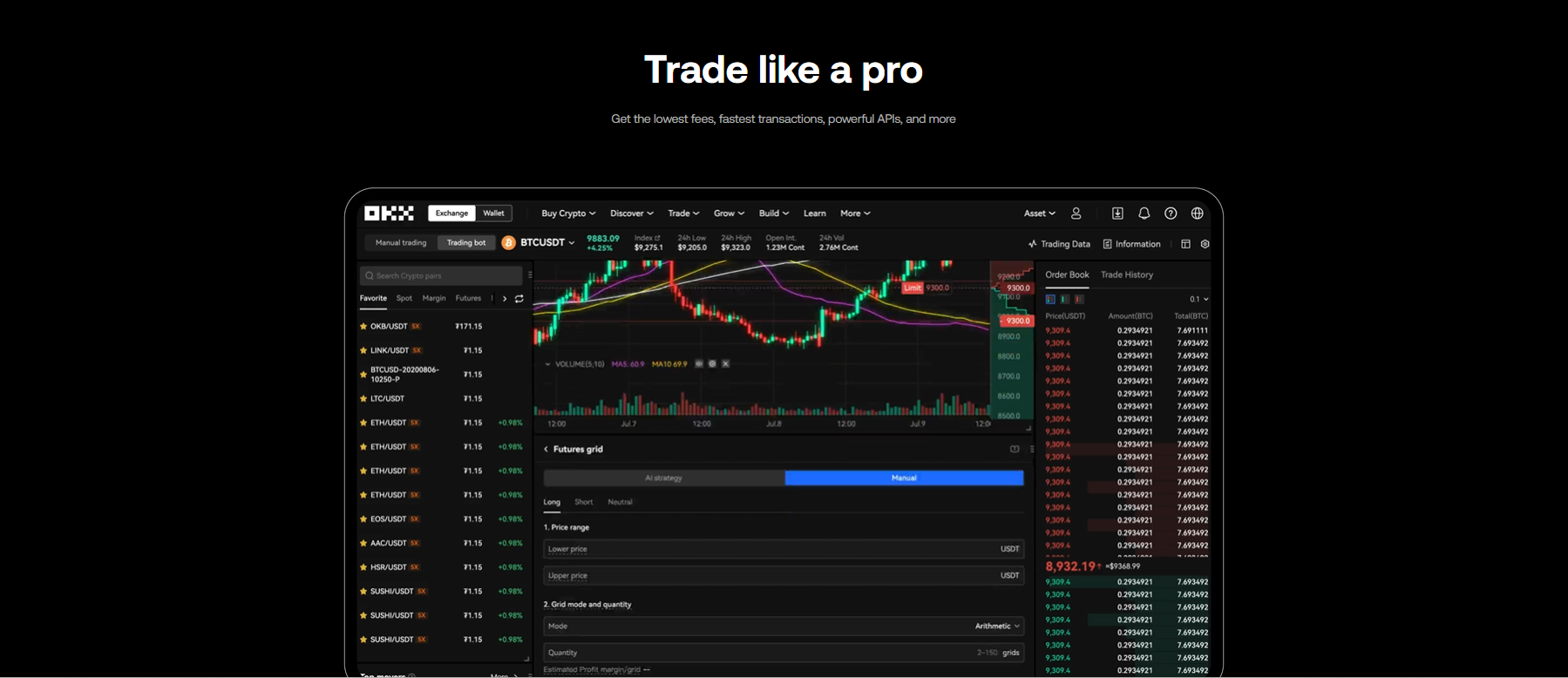
- Platform & Tools: Modern interface and mobile apps (iOS/Android) with portfolio tools, price alerts, API access, and automated trading bots. Also offers P2P trading, staking/earn programs, a launchpad for token sales, and NFT/DeFi integrations via its Web3 wallet.
- Customer Support: 24/7 multilingual support via live chat, email, ticket and extensive help center. However, community feedback frequently cites long response times and unhelpful answers.
Pros
-
User-friendly and attractive interface
-
Very low trading fees with VIP discounts
-
Vast crypto selection (350+ coins)
-
Advanced trading tools (bots, API, charts)
-
Fast transaction processing (when systems are stable)
-
Built-in staking and earn programs
Cons
-
Reports of frozen accounts, blocked funds, delayed or denied withdrawals, and unresponsive customer support.
-
Allegations of scams, extortion schemes, abrupt KYC demands, and repeated verification failures frustrating users.
OKX Overview
| Parameter | Details |
|---|---|
| Exchange Name | OKX |
| Year Established | 2017 |
| Headquarters Location | Seychelles |
| Regulatory Compliance | Regulated in Malta, Seychelles, and Dubai |
| Available Cryptocurrencies | 350+ |
| Fiat Currency Support | USD, EUR, GBP, AUD, BRL, CNY, HKD, JPY, KRW, RUB, TRY, VND |
| Native Token (if any) | OKB |
| Maker Fees | 0.08% |
| Taker Fees | 0.10% |
| KYC Required | Yes |
| Deposit Methods | Bank Transfer, Credit/Debit Card, Crypto Transfer, Third-party Payment Processors |
| Withdrawal Methods | Bank Transfer, Crypto Transfer |
| Mobile App Availability | iOS, Android |
| Support Channels | Live chat, Email support, Help center, Social media, Ticket system |
| Support Availability | 24/7 |
Introduction
OKX (operated by OKX Financial Group) is a major global crypto exchange headquartered in Seychelles. Launched in 2017, it grew rapidly to serve millions of traders worldwide. OKX is licensed/regulated in Malta, Seychelles, and Dubai, and in early 2025 obtained pre-authorization under Europe’s new MiCA framework, preparing to serve the EU market. The platform offers a comprehensive ecosystem: spot and margin trading, a variety of derivatives (futures, perpetual swaps, options), plus earning features like staking and lending. Its native token OKB is used for fee discounts and special platform perks.
Over time OKX has built a reputation as a feature-rich, low-cost exchange. It supports hundreds of cryptocurrency assets (big names like BTC, ETH, LTC plus many altcoins) and multiple fiat gateways (USD, EUR, GBP, AUD, etc.). With a slick mobile app and powerful trading interface, it appeals to both beginners and advanced traders. Yet OKX’s rapid growth has been accompanied by controversies. User forums and review sites contain numerous complaints about operational issues (discussed below). In this article, we dig into OKX’s safety, user feedback, fees, features and whether it can be trusted in 2025.
Is OKX Safe?
OKX implements standard security safeguards expected of top exchanges. The platform claims to keep most digital assets in cold wallets, regularly publishes proof-of-reserves audits, and maintains insurance funds to cover unforeseen losses. Accounts must enable two-factor authentication (2FA) for withdrawals, and users can whitelist withdrawal addresses and set anti-phishing codes. These measures help protect funds from hacking and phishing. Notably, OKX has not experienced any publicly reported security breaches or hacks, which is a positive indicator.
Regulatory compliance is mixed. OKX is licensed in several jurisdictions (Malta, Seychelles, Dubai) and is preparing for a European MiCA license. However, OKX is not licensed to serve U.S. retail customers; U.S. users must use OKX’s institutional offshoot or other exchanges. The exchange collects full KYC (identity) information, which it says is kept secure and not shared (for example, uploaded ID photos and selfies are stored privately). In privacy terms, OKX complies with standard policies, though as with any centralized service it holds personal data.
Known Incidents: No major hacks have been reported, but users have raised alarms over internal security concerns. The bulk of criticism focuses not on technical hacks but on OKX’s handling of accounts and disputes. For instance, some users report that funds were blocked or held during verification delays. Others allege OKX staff collusion in fraudulent schemes. While there is no confirmed case of OKX itself stealing funds, the prevalence of such complaints is troubling.
In summary, OKX uses robust technical security (cold storage, 2FA, whitelists, proof-of-reserves). It has strong global licensing (especially in Europe) and has avoided public hacks. However, user reports reveal serious operational risks: account freezes, withdrawal holds, sudden KYC locks, and even alleged extortion. Prospective users should enable all security features (2FA, login alerts, withdrawal safelists) and proceed with caution—only keep funds on OKX that they can afford to leave for a while.
Reputation and User Feedback
Community feedback on OKX is highly polarized. On one hand, analysts note OKX’s strong platform: it consistently scores high on objective security ratings and offers a polished trading experience. On the other hand, user reviews paint a much more negative picture. OKX’s aggregated user rating is just 2.9 out of 5 stars, indicating widespread dissatisfaction.
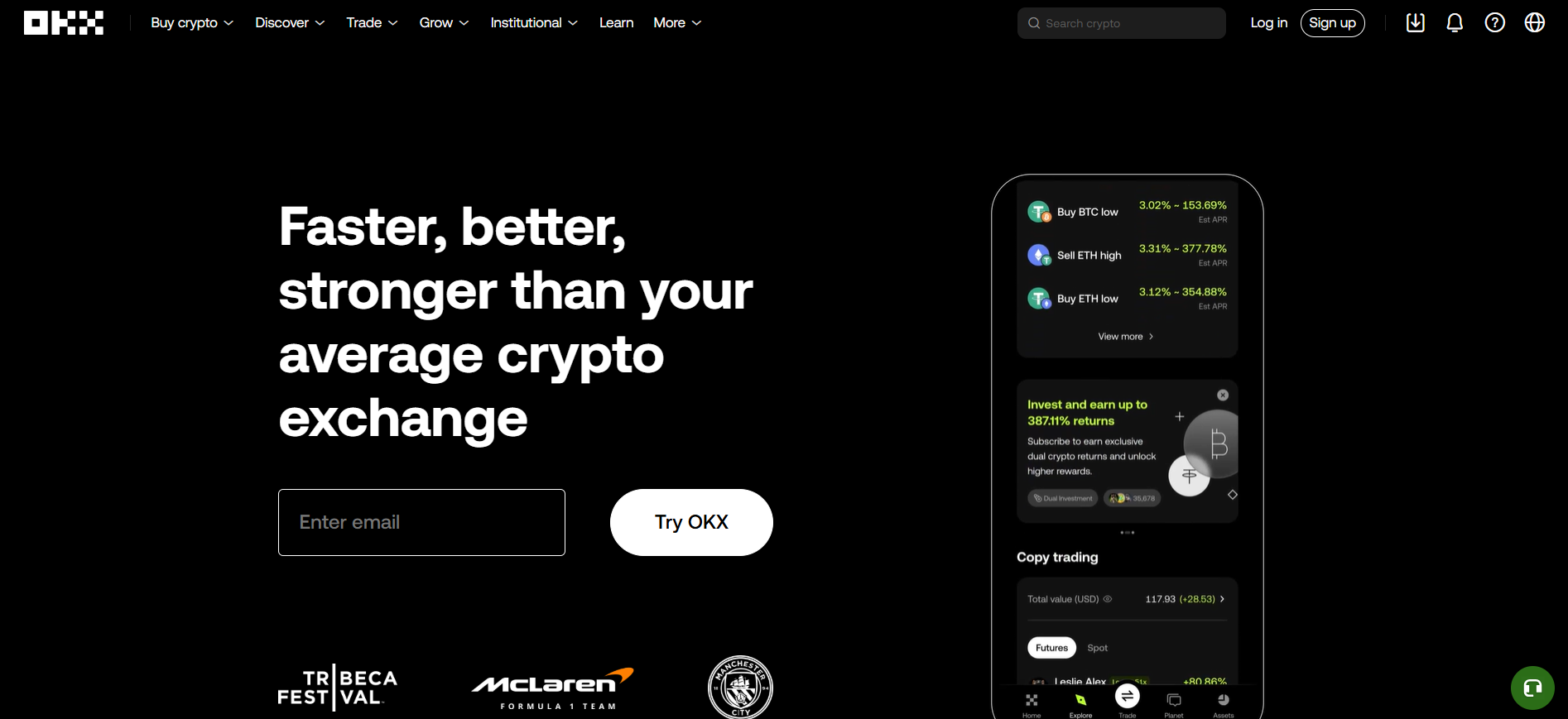
Many customers praise OKX’s user interface and features. Sentiment analysis of reviews shows recurring compliments about the exchange’s “user-friendly” design and comprehensive tools. Traders like the low fees and wide selection of assets, which make trading more affordable and versatile. Beginners report that the platform is “easy to use” and appreciate educational tools and community support.
However, the majority of comments are negative. A detailed analysis of 1,000 user reviews (updated July 2025) found severe issues: “accounts frequently frozen,” “funds blocked,” “exit scamming activities,” and “unauthorized withdrawal address changes” were common complaints. Support staff are criticized as slow or even complicit: reviews mention “poor customer support with generic responses” and in some cases “support staff potentially colluding with scammers”. Verifying identity is often a headache, with people describing repeated failures and last-minute KYC demands. Many users feel trapped – their money was held “hostage” during dispute processes.
In essence, OKX’s community reputation is largely distrustful. Positive feedback about fees and features is overshadowed by accounts of blocked withdrawals, long delays, and alleged fraudulent behavior. Prospective users should be aware of these critiques. It’s wise to search recent user reviews on Trustpilot and forums before engaging, as experiences can vary widely.
Supported Cryptocurrencies
OKX boasts a huge catalogue of tradable assets. According to its own data, over 350 cryptocurrencies are available on the platform. This includes all major coins (Bitcoin, Ethereum, Litecoin, etc.) and a very broad selection of altcoins and stablecoins. The exchange is known for listing new tokens quickly; OKX even conducts periodic airdrops and launchpad sales to reward users with emerging projects.
In addition to crypto-to-crypto trading, OKX supports multiple fiat-to-crypto markets. The platform accepts deposits in a dozen+ fiat currencies, including USD, EUR, GBP, AUD, BRL, CNY, HKD, JPY, KRW, RUB, TRY, and VND. Users can buy popular coins directly with these fiats via bank transfers or cards. The breadth of markets means there are many trading pairs: for example, common pairs like BTC/USD, ETH/EUR, or XRP/USDT are available, as well as fiat pairs in local currencies.
OKX’s native token, OKB, is also tradable on the exchange. Holding OKB grants benefits such as reduced fees and voting in token selections. Overall, OKX’s asset coverage is on par with the largest exchanges – virtually any coin listed on top venues can likely be traded on OKX as well. (Users should always double-check that any specific token is supported before depositing it.)
Account Types and Limits
OKX uses a tiered verification system. At sign-up, you create a basic account (typically only needing email/phone verification) which allows limited trading. To unlock higher deposit and withdrawal limits and all features, you must complete identity (KYC) verification. OKX’s KYC process requires government-issued ID and proof of address. Successfully completing KYC (sometimes called “Level 1” or “Level 2” verification) raises your limits significantly.
Exact limits depend on your country and KYC level. For example, a fully verified user in Australia might withdraw up to A$10 million daily, whereas an unverified or lower-level user may be capped around A$10k–50k per day. OKX periodically increases these ceilings, but historically some users reported abrupt reductions (e.g. a $5,000 USD daily limit on non-verified accounts appeared without notice). As a rule, KYC is required for substantial activity: OKX explicitly states that KYC is needed for higher withdrawal limits and full platform access.
Additionally, special rules apply for certain products. Margin and derivatives trading typically requires at least basic KYC. P2P fiat trades may also require verification of payment details. Withdrawal limits reset every 24 hours (for crypto) or monthly (for fiat). Users should check the “Deposit/Withdraw” section on their account – OKX prominently displays each method’s remaining limit. Overall, ensuring KYC compliance is crucial to avoid unexpected holds on funds.
OKX Fees
OKX offers competitive trading fees. On the spot market, the standard fee rate is 0.08% for makers and 0.10% for takers. These are already among the lowest in the industry, and can be further reduced: OKX provides tiered VIP discounts based on your 30-day trading volume and OKB token balance. For example, holding more OKB can slash fees for active traders. Futures and options markets also have low fees (for non-VIP users, futures maker/taker are 0.02%/0.05%).
When depositing crypto, OKX charges no fee (only network/gas fees apply). Fiat deposits are generally free as well, though third-party processor fees or banking fees may apply externally. Withdrawals incur a fee per currency: for cryptocurrencies this is typically the network gas fee (set by the blockchain), while for fiat withdrawals OKX charges a fixed fee. For instance, USD bank transfers have no deposit fee but a $3 withdrawal fee. Each payment method’s fees are clearly listed in OKX’s help pages.
Importantly, OKX does not have hidden trading fees or spreads – what you see is what you pay (maker/taker). Advanced order types (limit, market, stop-limit, etc.) execute at these rates. The VIP discount structure can lead to virtually zero fees for ultra-high-volume traders. Overall, OKX’s fee structure is a strong selling point: low base rates and clear incentives for power users.

OKX Features and Products
-
Spot and Margin Trading: The core exchange supports spot trades of all supported crypto pairs. It also offers margin trading, letting users leverage positions (2x–10x on some pairs).
-
Derivatives (Futures, Perpetuals, Options): OKX has a full derivatives suite. Perpetual contracts and futures let traders go long or short with up to 100x leverage. Options trading is also available for advanced strategies. These products use the same low-fee VIP structure.
-
P2P Trading: A peer-to-peer marketplace connects buyers and sellers of crypto for local currencies. Users can trade directly with others under conditions they set, with OKX as arbiter in disputes. (Note: many user complaints involve unresolved P2P disputes.)
-
Staking and Earn Products: OKX Earn lets users stake or lock up crypto to earn interest or rewards. Supported programs include fixed staking (e.g. DOT, ADA), DeFi farming through the wallet, and savings products. These give passive yields while retaining custody on the exchange.
-
Token Launchpad and Airdrops: OKX periodically hosts new token sales (IEOs) on its Launchpad platform and distributes promotional airdrops. OKB holders often get priority or bonus allocations. This is part of the incentive programs that reward active users.
-
OKX Wallet (Web3): The integrated Web3 Wallet app (desktop/mobile) allows self-custody of crypto and NFT management. It connects to DeFi and NFT platforms, enabling users to swap assets and participate in decentralized finance. OKX’s ecosystem thus spans centralized and decentralized services.
-
Automated Tools & API: The exchange offers built-in trading bots (grid bots, TWAP, DCA strategies) and an open API. Traders can automate strategies without coding (via the site/app) or use API keys to connect third-party trading systems.
-
Mobile App and Interface: OKX has full-feature mobile apps for iOS and Android. These apps support trading, portfolio tracking, market data, price alerts and account management. The desktop/web interface is similarly modern and configurable.
These features make OKX a one-stop platform for crypto trading and investing. Newcomers get easy buy/sell tools and staking options, while seasoned traders can access advanced markets and developer-friendly APIs.
Customer Support
OKX provides 24/7 multilingual support. Users can reach out via live chat, email, or a ticket system, and there is a comprehensive online Help Center with FAQs, guides and video tutorials. OKX also maintains active social media channels (Twitter, Telegram, etc.) for announcements.
In practice, response times vary. The official stance is to resolve issues quickly (OKX has claimed many problems are solved within minutes), but community feedback suggests otherwise. According to sentiment analysis, the biggest user frustration is support quality. Many reviewers say replies are slow or formulaic. In worst cases, users report unanswered complaints or unhelpful “check our FAQ” responses.
OKX does offer “self-service” tools in its Help Center, and some users successfully resolve minor issues via the site. However, in serious disputes (e.g. frozen accounts or fund holds) many report long wait times. The company also provides educational materials: articles on security, trading tutorials, and a FAQ section. Overall, while support is available around the clock, prospective users should be prepared to be largely self-reliant and patient when problems arise.
How to Use OKX: Step-by-Step Guide
-
Sign Up: Visit the OKX website or download the OKX app (iOS/Android) and click Sign Up. Register using your email or mobile number, then create a strong password. Verify your email/phone via the code sent.
-
Secure Your Account: Immediately enable two-factor authentication (2FA) via Google Authenticator or SMS for enhanced security. OKX strongly recommends this to protect your account.
-
Verify Your Identity (KYC): To lift basic limits, go to Account Settings → Identity Verification. Provide your government-issued ID and proof of address. OKX will review the documents; once approved, you will have full access and higher withdrawal limits.
-
Deposit Funds: Choose a deposit method from Assets → Deposit. You can deposit cryptocurrency (deposit address provided) with no exchange fee, or select a fiat method (bank transfer, credit/debit card). Follow the on-screen instructions for your region.
-
Start Trading: Go to Markets (spot) or Trade. Select your desired market (e.g. BTC/USDT, ETH/USD, etc.) and place orders (market, limit, etc.). For long-term holds, use the Buy/Sell widget or Convert tool for quick swaps. The mobile app provides the same functionality on the go.
-
Use Advanced Features: Explore Derivatives for futures/options, or Earn for staking products. You can join an OKX trading bot or participate in an IEO via the Launchpad if eligible. All features are accessible after KYC is done.
-
Withdraw or Sell: To cash out, go to Assets → Withdraw. Choose crypto withdrawal or fiat withdrawal (bank transfer). Enter destination (crypto address or bank details) and confirm. Remember withdrawal limits: as a verified user, you can withdraw large amounts, but unverified accounts face low caps.
Throughout, refer to OKX’s tutorials and support articles for guidance. Keep small test amounts when transferring new coins, and monitor the withdrawal whitelist to ensure you receive your funds safely.
Who Is OKX Best For?
OKX’s wide feature set and low fees make it appealing to a broad range of crypto users, but it is especially suited to certain profiles:
-
Active Traders & Traders: Those who need extensive markets and tools will like OKX. Its low maker/taker fees and high liquidity in spot/futures are attractive for day trading, arbitrage, or algorithmic strategies. High-volume traders benefit from VIP discounts.
-
Tech-Savvy Investors: OKX offers advanced order types, API access and automated bots, so users comfortable with crypto technology (or developers) can fully leverage the platform. The integrated Web3 wallet also attracts users who want seamless DeFi/NFT access.
-
Stakers and DeFi Enthusiasts: Investors seeking passive yield will appreciate the staking, saving, and DeFi farming options on OKX. These products require minimal active management beyond locking assets.
-
Cryptocurrency Beginners: On paper, OKX also serves newbies: it has one-click buy/sell for major coins, intuitive UI, and educational guides. Indeed, many reviews note it is “easy for beginners”. However, beginners should be cautious: the potential difficulties with support and KYC mean that first-time users should start slowly and use only small amounts until familiar.
By contrast, OKX may be less suitable for:
-
Users Needing Extensive Support: If you expect fast, personalized customer service, the reported support issues may be a deal-breaker.
-
Regulated Markets: Residents of the U.S. (for retail trading) or other tightly regulated countries should note that OKX’s services may be limited or unavailable in their region.
-
Casual Holders: People who just want a simple crypto wallet without trading might prefer a non-custodial solution, since keeping funds on any exchange carries inherent risk.
In summary, OKX is best for users who prioritize features and low fees, and who understand crypto risks. It can be powerful for experienced traders and enthusiasts, but all users should be mindful of the red flags raised in community feedback.
Final Verdict
OKX is undoubtedly a powerful and feature-packed exchange. It has established itself among the largest global platforms, offering hundreds of coins, multiple trading modes, and a user-friendly interface. Its fee structure is highly competitive, and it provides advanced security measures (cold storage, 2FA, proofs-of-reserves) that suggest strong technical safeguards. Licensing in jurisdictions like Malta and Dubai adds legitimacy, and no major thefts or hacks have been recorded, which is commendable.
However, the platform’s persistent user complaints cannot be ignored. The prevailing sentiment among customers is negative. Reports of sudden KYC blocks, inaccessible funds, and unhelpful support cast doubt on the exchange’s reliability. Even if not a direct hack or technical failure, these operational issues effectively amount to security failures for the affected users. The analysis of user reviews highlights “frozen accounts, blocked withdrawals, funds held hostage” as key grievances. This indicates systemic trust problems.
So, is OKX safe? Technically, OKX has the industry-standard protections, and many users trade without incident. But the pervasive negative feedback suggests exercising caution. If you choose OKX, use it as you would any centralized exchange: enable every security feature, verify fully (to avoid surprises), and only leave as much crypto on the platform as you need for trading. It may be best suited for experienced crypto traders who can navigate complexity and have backup plans. Beginners or those alarmed by the stories of blocked funds might prefer a more conservative choice. Ultimately, OKX’s future hinges on how well it addresses these user trust issues.
Frequently Asked Questions
Q: What is OKX and where is it located?
A: OKX is a leading cryptocurrency exchange founded in 2017 (originally called OKEx). It is headquartered in Seychelles and regulated in several jurisdictions including Malta and Dubai. OKX offers a full suite of crypto services – from spot and derivatives trading to staking and a Web3 wallet.
Q: Which cryptocurrencies can I trade on OKX?
A: OKX supports trading of over 350 cryptocurrencies. Major coins like Bitcoin (BTC), Ethereum (ETH) and Litecoin (LTC) are all available, along with many altcoins and stablecoins. You can trade these in various pairs (crypto-to-crypto, or crypto-to-fiat). OKX also has its own token, OKB, used for fee discounts and special platform perks.
Q: How do I open an account on OKX, and do I need KYC?
A: To create an OKX account, go to the OKX website or mobile app and register with your email or phone number, then verify it (enter the code sent). Set a strong password and enable two-factor authentication (2FA) for security. Basic registration allows trading with low limits, but to fully use OKX you must complete KYC verification. OKX requires identity documents (government ID, proof of address) for higher withdrawal limits and full platform access.
Q: What fees does OKX charge for trading and transactions?
A: OKX’s trading fees are low: the standard spot market maker fee is 0.08%, taker fee is 0.10%. These fees decrease for high-volume or OKB-holding VIP users. There are no fees to deposit crypto. Fiat deposits via bank or card may have third-party charges. For withdrawals, OKX charges a network fee for crypto (set by each blockchain) and a fixed fee for fiat withdrawals (e.g. USD bank withdrawal fee is about $3). Overall, fees are transparent and among the most competitive in the industry.
Q: How do I deposit and withdraw funds on OKX?
A: You can deposit cryptocurrency by sending coins to your OKX deposit address (found under Assets → Deposit). For fiat, OKX supports bank transfers, credit/debit cards and third-party processors depending on your country. Withdrawals are done under Assets → Withdraw: select crypto or fiat, enter the destination address or bank details, and confirm. Withdrawal limits depend on your KYC level (basic accounts have low limits, fully verified accounts much higher). Note that fiat withdrawals may take several business days.

Our Review Methodology
At Tradelize, we follow strict editorial standards to ensure all content is accurate, unbiased, and thoroughly researched. Our reviews, guides, and articles are fact-checked by a team of experienced cryptocurrency and finance professionals, and are not influenced by advertisers or affiliate relationships. Our Trust Score methodology combines direct data scraping from official broker, exchange, and wallet websites with sentiment analysis of up to 1000 verified user reviews. This dual-source approach enables us to objectively evaluate platform features, fees, regulations, security, and customer satisfaction. We then compile comprehensive, specification-based reviews that reflect both technical details and real user experience.
Disclaimer
Trading cryptocurrencies, forex, CFDs, and other derivatives involves significant risk and may not be suitable for all investors. Leverage can amplify both gains and losses. Past performance is not indicative of future results. The content on Tradelize is for informational purposes only and does not constitute financial or investment advice. Always seek professional guidance before making financial decisions. For full risk disclosures, click here.